


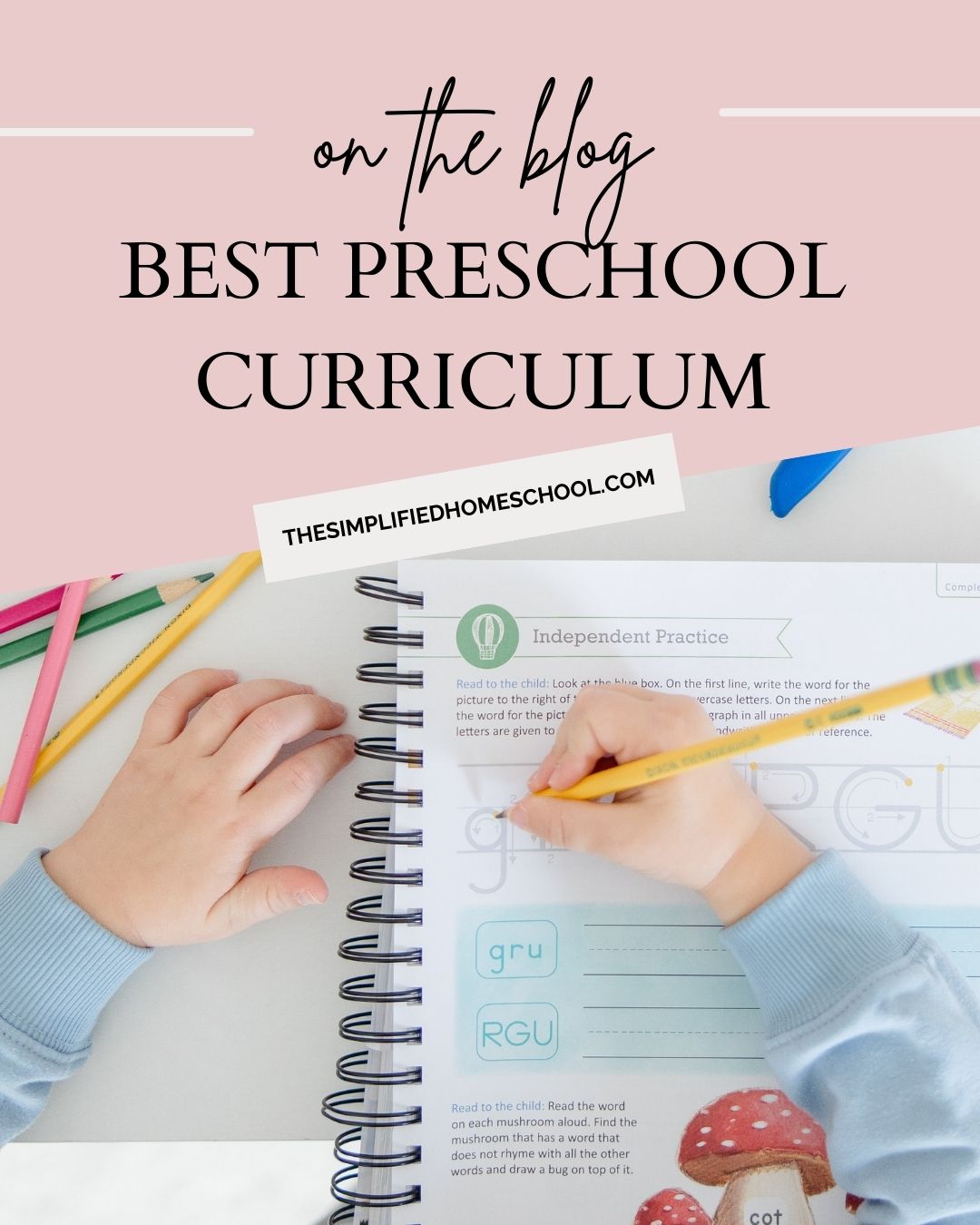
Best Preschool Curriculum: What We Used and Why It Worked
When people search for the best preschool curriculum, what they are usually trying to figure out is not just what to buy, but what preschool is even supposed to look like at home. Preschool does not need long lessons, expensive programs, or a full schedule to be meaningful. In fact, I would encourage you not to force a ton of worksheets and hours of instruction.
But despite knowing that curriculum was not necessary for preschool, I wanted something more structured, and you might too! We started with trying to do crafts and cute things but I couldn’t keep up with planning things and making sure we had the right supplies and it was overwhelming. So Wwe started preschool at home in a very simple way. Our older daughter was already homeschooling, and our son wanted to be apart of it pretty early. I also remember feeling unsure about what to do with a three-year-old all day. We started calling it “learning time,” and surprisingly, it became one of my favorite parts of the day! This was also during a season where I wasn’t sure I wanted to continue our homeschool journey, and this is when some pieces started to click for how to make work for us.
The best preschool curriculum is one that supports your child’s development without adding pressure to your home. It should feel flexible, not stressful, and easy to pick up when it fits your day.
Here is what worked well for us and why!
For curriculum, we wanted something gentle and open-and-go. We used The Good and the Beautiful Pre-K, and it worked really well for us! There are tons of great options but honestly I have zero complaints.
The Good and the Beautiful Pre-K gave us simple alphabet pages, light exposure to early skills, and activities that felt appropriate for a preschooler. Some days we painted the pages. Some days we colored them. Some days we used playdoh. By the end of it I definitely felt like he was more than ready for kindergarten, knowing all of his letters and letter sounds and how to count pretty high.
Even while starting a simple curriculum, independent play was still the main priority of preschool in our home. This is one of the most valuable parts of learning at this age, even though it often gets overlooked. When preschoolers have space to play on their own, they build creativity, confidence, and problem-solving skills.
If independent play is hard for your child, that is very normal. It wasn’t for our son but I know he is the exception! I actually remember a time when I posted on Facebook asking for advice for things to do with my son. I meant like things to do together because he was perfectly content playing by himself– but most of the responses were ways to entertain your child and I realized then that we might be the exception.
If this doesn’t come naturally, start with a short timer, maybe five minutes, and help your child choose something they are excited about. When the timer ended, praise them and ask them to tell you about what they did. Over time, that independent play timer can be stretched longer until they will be so excited about it they will even ask for independent time!
Life skills are also a big part of preschool. Folding laundry, stirring muffin batter, wiping the table, watering plants, or helping with simple chores might seem small, but to a preschooler, these are meaningful tasks. These moments build fine motor skills, responsibility, and confidence, and they help children feel capable and included in family life!
We also leaned into hands-on toys and activities that encouraged learning through play. We did not follow a strict Montessori setup, but we loved having a few open-ended options available. Magna-Tiles were a favorite in our house. Simple puzzles, building tracks, beads and pipe cleaners for fine motor work, and a play kitchen were all staples. These kinds of toys support imagination and learning without needing direct instruction.
Getting out of the house is always great, too! Preschool is a great age to take advantage of community spaces. Library story times, nature walks, grocery trips, and playground playdates are all great options. Social skills, language development, and curiosity grow naturally in these settings.
Just remember, this is such a sweet time to just start fostering the love of learning, whether you use a workbook or read together or play together. You do not need to force formal lessons or overthink the process!
If you are just getting started and wondering what to focus on before your first homeschool day, I created a free Simplified Homeschool Starter Checklist. It walks you through ten simple, doable steps to help you feel prepared without adding overwhelm.
Happy homeschooling,
Katelyn
Need more tips? Check these out:

View comments
+ Leave a comment