


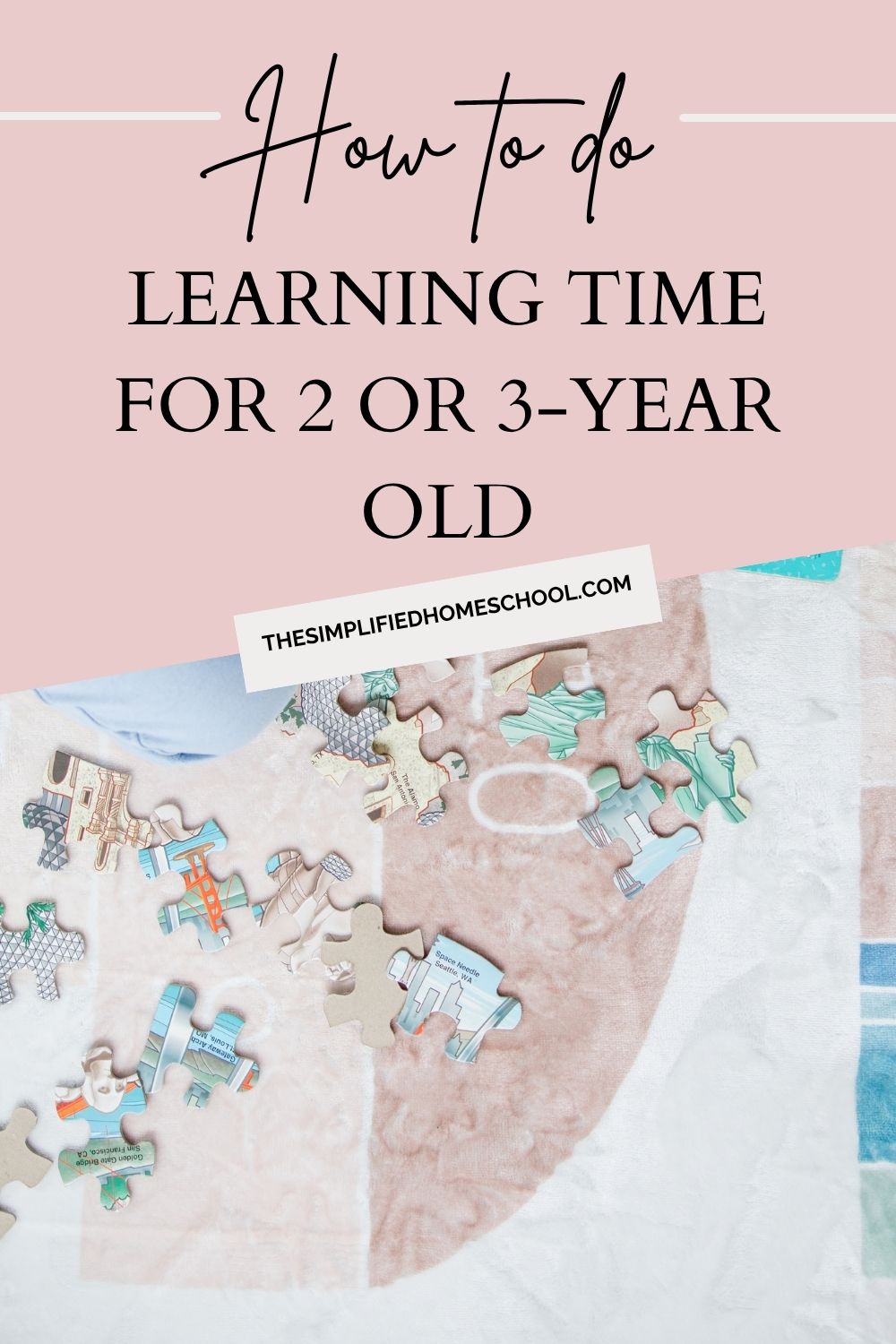
How to Do Learning Time with a 2- or 3-Year-Old
I get this question all the time — “What do you do for learning time with a two- or three-year-old?” And honestly? Not nearly as much as people think. Because in these early years, the most important kind of learning isn’t found in worksheets or flashcards — it’s found in play, connection, and conversation. So today, I’m sharing how to do learning time with a 2- or 3-year-old without making it stressful for them or for you; what really matters, what you can skip, and a few of our favorite toys and activities that make this stage so fun.
1. The Power of Play
If you take nothing else from this post, take this: play is learning.
When your toddler stacks blocks, stirs an imaginary pot, or lines up toy cars — they’re developing problem-solving skills, imagination, and fine motor coordination.
They don’t need a “curriculum.” They need you — and opportunities to explore safely.
Some of our favorite play-based toys for this age are simple things like:
- Wooden blocks
- Stacking cups
- Large-piece puzzles
- Shape sorters (every 2 year old is obsessed with this one!!)
- Play kitchens and pretend food (the ice cream is our fave!)
- Magna-tiles (literally obsessed with these, our 8 month old, our 5 year old, and our 13 year old all play with them!)
You don’t have to own every toy on the internet; sometimes less is more honestly. You just need a few open-ended options that encourage curiosity and creativity.
2. Be Intentional — But Don’t Push
It’s easy to fall into the trap of thinking we need to “teach” our toddlers every skill right now.
But the truth is, kids learn best when they feel safe, loved, and free to explore.
You can be intentional and have high expectations while choosing toys and activities that build skills, reading together daily, and limiting overstimulating screens — without pressuring them to hit milestones or sit still for lessons.
This season is about being intentional, not checking boxes.
So let go of the pressure. Slow down.
Your consistency and connection matter more than any curriculum ever could.
3. Follow Their Lead and Build Life Skills
One of the best ways to encourage independence is to follow your child’s lead as they start to do things on their own.
Let them help pour water, stir pancake batter, or put toys away — even if it takes longer or gets messy.
These “little things” are big learning moments.
Learning to get dressed, brush teeth, help set the table, or wipe up a spill builds confidence, fine motor skills, and responsibility.
Remember: these life skills are just as important as colors and shapes.
When we give our toddlers space to try, fail, and try again — we’re teaching perseverance, independence, and self-control.
4. Narrate Everything You Do
If I could give one single piece of advice forHow to Do Learning Time with a 2- or 3-Year-Old , it would be this: narrate your day.
Talk to your child about what you’re doing, seeing, and feeling — all the time.
“Let’s put your shoes on! One foot… two feet!”
“You hear that bird? It is a red bird, wow!”
“I’m pouring the water. Wow, it splashed!”
It might feel silly at first, but this constant narration helps them connect words to actions and builds incredible language skills.
Every moment is a chance to teach — not by lecturing, but by talking.
5. Read Aloud Every Day
Reading aloud is one of the most powerful tools you have as a parent.
It doesn’t have to be long or fancy. Just a few board books a day adds up to hundreds by the end of the year.
Let them sit beside you, flip pages, or hold the book upside down… it’s all part of the process.
Reading builds vocabulary, focus, empathy, and imagination all before they ever pick up a pencil.
6. Encourage Both Together Time and Independent Play
In our home, I try to balance playing together and encouraging independent play.
Playing together helps build connection — things like puzzles, Play-Doh, simple games, or building blocks are perfect for this.
But learning to play independently is just as important. It helps your child build attention span, confidence, and creativity.
Start small — maybe 10 minutes of solo play near you — and slowly increase over time.
You’ll be amazed at how capable they become when given a little space.
7. Keep Screen Time Intentional
This one’s tricky — because we’re far from perfect here.
We use screens more than I’d like sometimes… but we try to make it intentional.
I aim for slower-paced, educational shows like Miss Rachel or Bluey, and I try to stay nearby so I can talk about what’s happening on screen.
“Look, she’s helping her friend — that was kind!”
“What color is that balloon?”
Even screen time can become connection time when you stay engaged.
8. Get Outside
Fresh air fixes a lot of things.
Climbing, running, digging, and jumping are all early learning at its best — building balance, coordination, and sensory awareness.
You don’t need a big yard or fancy play set — just a few minutes outside can make a huge difference.
Final Thoughts
Learning with a 2- or 3-year-old doesn’t have to be structured.
It’s about being intentional without pushing, engaged without overcomplicating, and present without perfection.
Follow their lead. Celebrate the little things.
You’re teaching them every time you talk, read, laugh, and play — and that’s more than enough.
If you’re thinking ahead to official homeschooling, my free Homeschool Starter Checklist is the perfect first step.
Want more homeschool tips? Check these out:
Cheering you on,
Katelyn

View comments
+ Leave a comment